In brief
Fabric decides how an outfit drapes, photographs, travels and ages. Crepe is soft and matte, scuba is smooth and structured, organza is crisp and light, net and tulle add airy volume, satin catches light and sequins add sparkle and weight. This guide explains how each behaves in real life and how to choose for the occasion. Always follow the care label on your garment.
When people describe what they want to wear, they usually start with colour and shape. Fabric tends to come last, which is a pity, because fabric is what you feel on your skin for eight hours, and what decides whether a dress holds its line, moves on a dance floor or creases the moment you sit down.
This is a practical tour of the fabrics you will meet most often in occasion wear, with notes on how each looks, feels and behaves. The references are to materials used across the Parneet Gujral collections, as named in the product descriptions, though the characteristics described are general.
At a glance
| Fabric | Feel | Drape | Best for |
|---|---|---|---|
| Crepe | Soft, slightly textured, matte | Fluid but with body | Dresses, tailored sets, jumpsuits |
| Scuba | Smooth, springy, cushioned | Structured | Sculpted silhouettes, jumpsuits |
| Organza | Crisp, sheer, light | Holds shape, floats | Appliqué, sleeves, volume |
| Net and tulle | Airy, open mesh | Stands out from the body | Layers, tiers, overlays |
| Satin | Smooth, glossy | Fluid and slinky | Skirts, blouses, evening |
| Georgette | Light, slightly grainy | Flowing | Easy dresses, warm weather |
| Sequins | Heavy, reflective | Depends on the base fabric | Accents and evening pieces |
Crepe
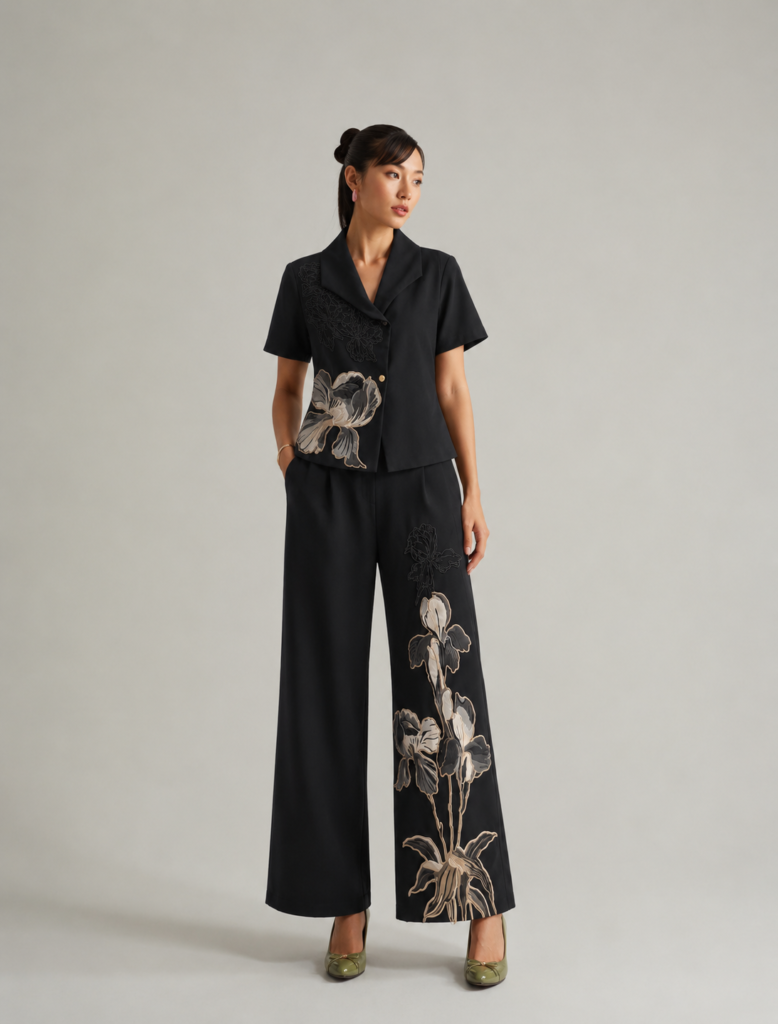
Crepe is the workhorse of occasion wear. It has a subtle surface texture and a matte finish, which makes it forgiving in photographs and flattering in evening light. It drapes well while still holding a shape, so it works for both tailored pieces and softer dresses.
Several Parneet Gujral dresses are described as crafted in banana crepe, often with handcrafted organza floral appliqué, such as Sunflower Lace. The combination is useful to understand: crepe provides the quiet base and the organza provides the dimension.
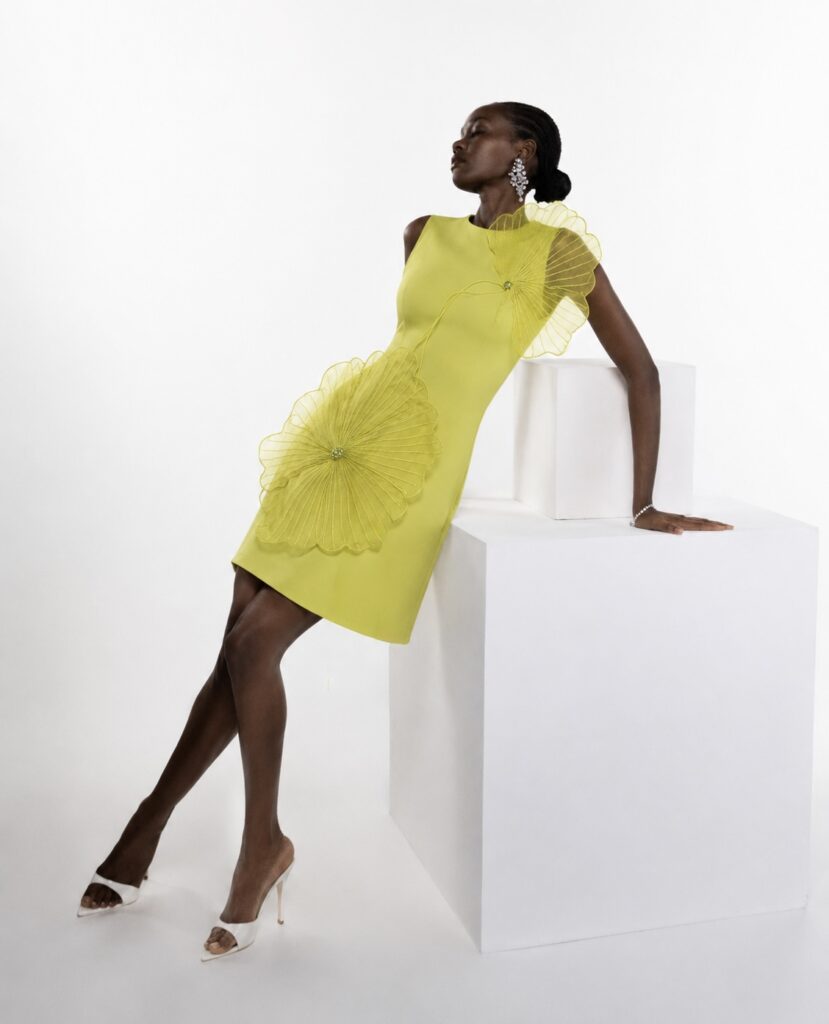
Wear notes: crepe tends to resist heavy creasing, which is helpful for travel. It can show water marks, so be careful with drinks. Always check the care label.
Scuba
Scuba is a smooth, stretchy, slightly thick knit that holds structure. It does not cling like jersey and does not flop like a fine fabric; instead it creates clean, architectural lines. That is why it appears in sculpted jumpsuits and dresses. The Athena jumpsuit, for instance, is described as crafted in structured scuba, with a clean, sculpted form.
Wear notes: scuba is comfortable for long evenings because it has some give, but it also holds warmth, so it may feel heavy in very hot venues. Its clean surface pairs well with simple jewellery.
Organza
Organza is sheer, crisp and light. It is rarely the base of a whole outfit, and more often the detail: a sleeve, a ruffle, a cut-out flower. Used for appliqué, it adds dimension without weight. Used as a base, as in Peony Blanche, a white jumpsuit described as crafted from organza with pearl and sequin embellishment, it creates a delicate, airy effect.
Wear notes: organza holds shape but can snag on rough surfaces and jewellery, so be careful with bracelets and bag hardware.
Net and tulle
Net is an open mesh; tulle is a soft, fine net. Both create volume without weight, which is why they appear in tiered skirts, sleeves and overlays. They are best treated as texture. Because they stand away from the body, they photograph beautifully on a dance floor.
The tiered silhouette of the Aphrodite dress shows how layers of light fabric create a soft, voluminous shape; check the product page for its exact material.

Wear notes: avoid sitting on the fabric or pressing it against rough surfaces. Store it loosely, not folded tightly.
Satin and georgette
Satin has a smooth, light-reflecting surface that looks luxurious in small doses: a skirt, a blouse, a trim. Georgette is lighter and slightly grainy, with a flowing movement that suits warm-weather dresses. Satin shows marks and fingerprints more readily than matte fabrics; georgette tends to be more forgiving.
Sequins and embellishment
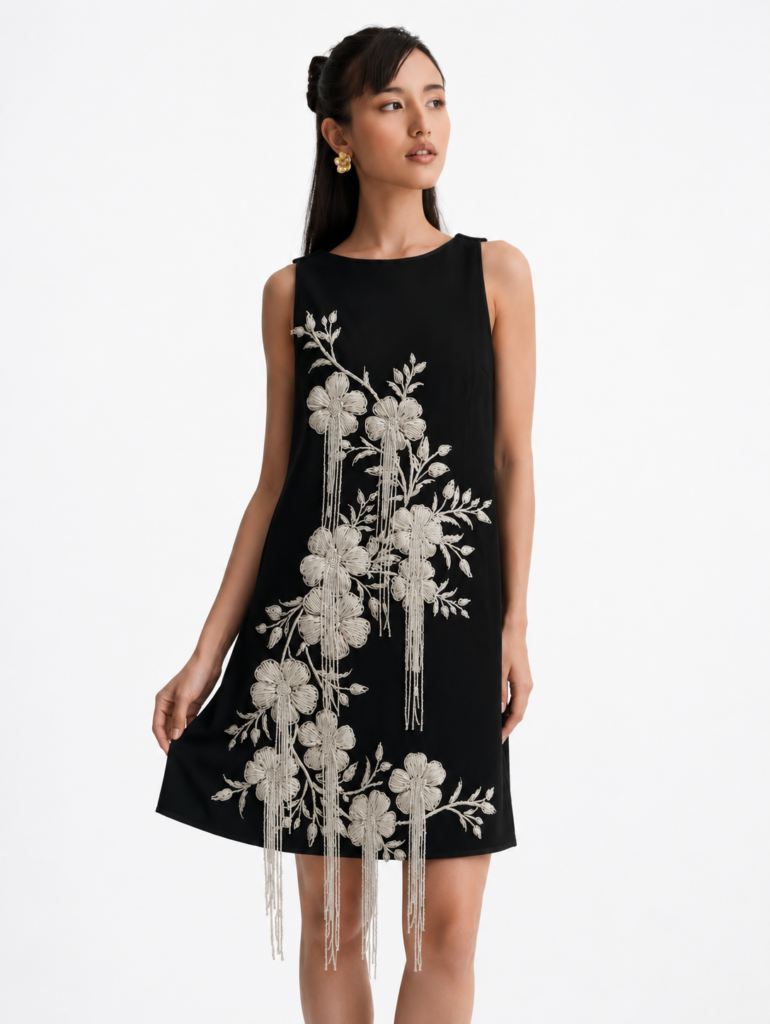
Sequins reflect light and add weight, which affects how the garment hangs. On a fluid fabric like crepe they can create movement and sparkle; on a stiffer base they create structure. Because they add weight, sequinned pieces often look best with simpler cuts. Where a product description mentions hand-sewn sequins or hand-applied pearls, the pieces are applied individually, which gives a more dimensional surface than printed or sheet sequins.
For care advice, see our guide to caring for embroidered and embellished clothes.
How a fabric changes with the cut
The same fabric behaves differently depending on how it is cut. Crepe cut on the bias flows; cut straight it holds a line. A scuba jumpsuit cut close to the body looks sculptural; a looser scuba cut feels sporty. Organza used as a single layer is delicate and sheer; doubled over lining it becomes a quiet, dimensional surface. When you read a product description, pair the fabric with the cut and the photographs, and ask yourself whether the way it hangs in the picture is the way you want to feel when you wear it.
Choosing fabric by occasion
- Daytime wedding events: georgette, light crepe and organza details. Read our wedding guest guide.
- Cocktail evenings: crepe, scuba and satin, with sequins as an accent. See what to wear to a cocktail party.
- Warm destinations: light crepe and georgette that dry fast and fold small.
- Cool weather: structured crepe, scuba and heavier weaves, layered under a coat.
The right fabric makes the outfit easy to wear. The wrong one makes you think about it all evening.
Fabric and comfort
Comfort is partly about fibre and partly about finish. Embroidery and appliqué can feel textured against the skin, sequins can scratch at seams, and structured fabrics hold warmth. If you have sensitive skin or know you will be wearing the piece for many hours, ask the team about lining and finishing before ordering.
Reading a product description
Look for the fabric name, any lining information and the care instruction. Product pages on this site list fabric and wash care for many pieces; for example, the Sapphire Sky Gown lists its fabric as Croatia and net with dry clean care. If the description does not answer a question, ask the team on WhatsApp.
Shop by fabric mood
Browse dresses, jumpsuits or gowns and read the fabric notes on each product page.
Frequently asked questions
Which fabric creases least for travel?
Crepe and structured weaves generally resist heavy creasing better than very fine or delicate fabrics, though results depend on the specific garment. Check the care label.
Is scuba suitable for hot weather?
It is comfortable and structured, but it is a relatively thick knit, so it may feel warm in very hot or humid venues. For heat, lighter crepe or georgette may be more comfortable.
What is the difference between net and tulle?
Both are open mesh fabrics. Tulle is generally finer and softer, while net can range from fine to more structured. In practice both are used for volume and layering.
How should I store sequinned or beaded garments?
Hang or lay them flat with tissue between layers, away from rough surfaces, and follow the care label.