In brief
Children’s occasion wear has to do two jobs: look special in photographs and stay comfortable for hours. Choose by age band and measurements, not by how old a child “looks”, favour soft linings and easy fastenings and let the child have a say in colour. Because pieces are made to order, measure early and ask the team if a child is between age bands.
Anyone who has dressed a child for a wedding knows the sequence. The outfit looks wonderful at 5 pm, is itchy by 7 pm and abandoned in a corner by nine. Children’s formal wear has a harder job than adult wear: it must look beautiful, survive running, hugging, spilled juice and a long evening, and still be something the child agrees to wear.
This guide covers sizing, comfort, styling and planning for celebrations, so the outfit survives the whole event.
Sizing: use measurements, not guesses
The sizes on the Parneet Gujral kids’ pieces are listed in age bands: New Born, then 1-2, 2-3, 3-4 and so on, up to 12-13. Age bands are a starting point only. Children of the same age vary a good deal in height and build, so measure rather than assume.
What to measure
- Chest: around the fullest part, under the arms.
- Waist: around the narrowest part of the torso, or where the garment will sit.
- Height: from the crown of the head to the floor, barefoot against a wall.
- Dress length: from the top of the shoulder to where you want the hem to fall.
Children fidget, so measure with a soft tape, turn it into a game and take each measurement twice. Write the numbers down with the date.
If a child is between sizes
Because garments are made to order and the store’s policy does not allow exchanges once an order is confirmed, it is worth asking before you order. Send the measurements and the piece you have chosen to the team on WhatsApp. For general sizing principles, see our measuring guide, which describes the process for adults.
A small amount of growing room is sensible, but a dress that is several sizes too large rarely looks right in photographs. If the event is soon, size for the child as they are now.
Comfort first
A comfortable child is a happy one, and happy children photograph better. Check these before choosing.
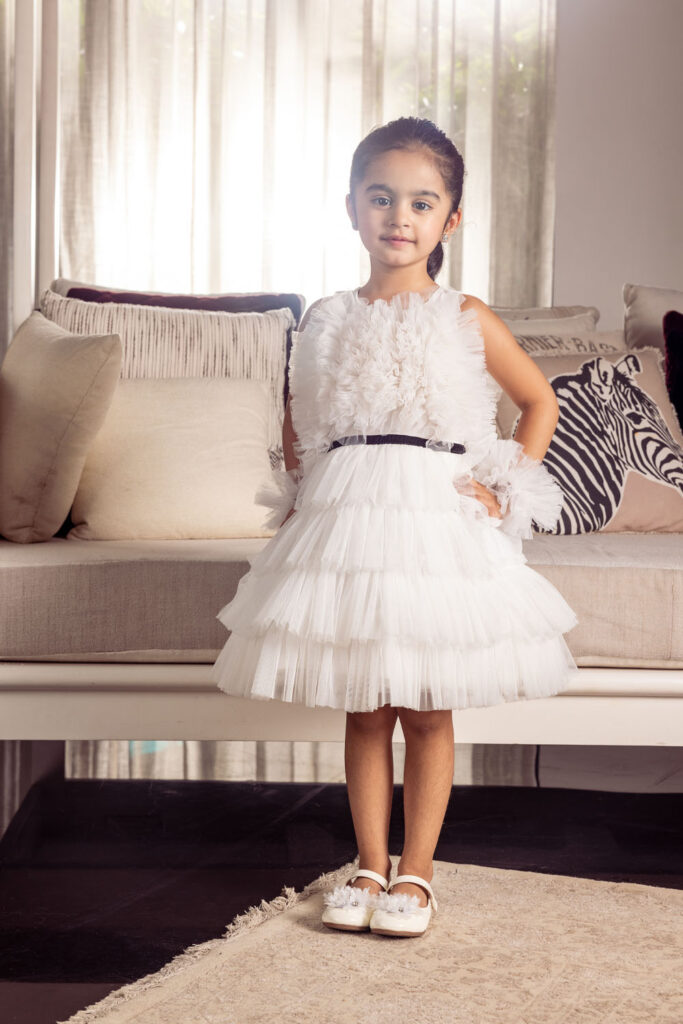
- Fabric against the skin. Net, tulle and embroidery can feel scratchy. Product descriptions list the material; for example, some pieces are described as net, and others as pure cotton. Where a piece is net, a soft lining or a cotton layer underneath can help. Ask the team about lining before you order.
- Fastenings. Back zips are easy for an adult to manage, but a child cannot reach them for a bathroom break. Plan for an adult to help.
- Movement. Make sure the child can sit, climb into a car and run.
- Temperature. Pair with a layer in winter, and choose lighter pieces in summer. For colder weather, see the kids’ range, which includes coats and jackets.
Styling by occasion
| Occasion | Idea | Practical note |
|---|---|---|
| Wedding ceremony | A dress or set in a soft, festive colour | Avoid white if the family has asked guests not to wear it |
| Sangeet or party | Fuller skirts, playful details | Choose shoes the child can dance in |
| Birthday or family celebration | A favourite colour and a fun detail | Let the child help choose |
| Festival gathering | Bright colours, comfortable cuts | Keep a spare outfit in the car |
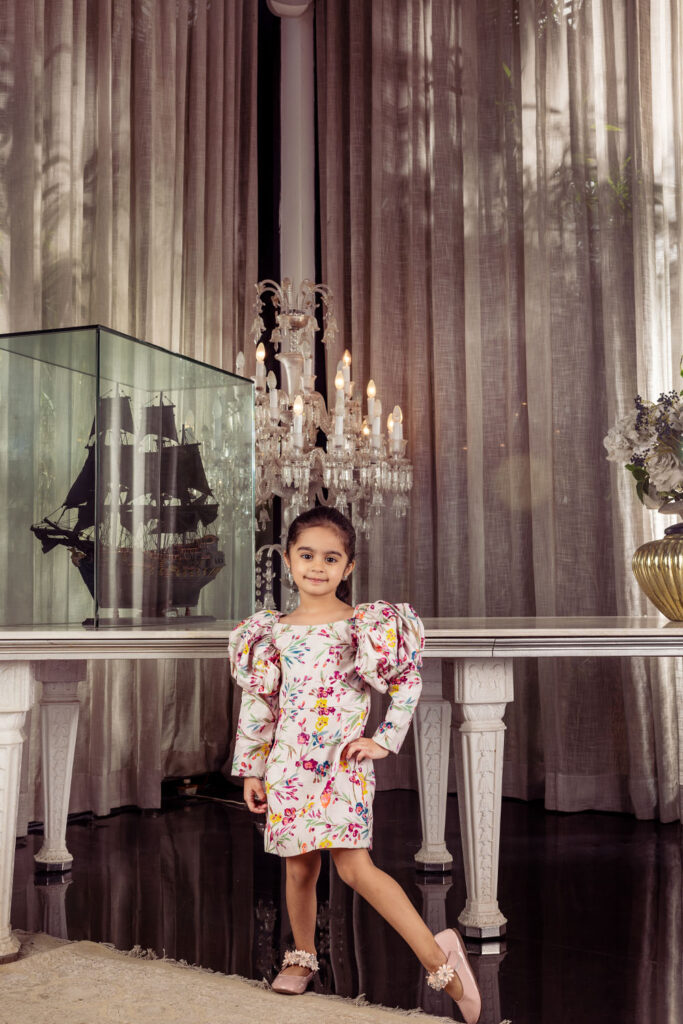
Pieces such as the Dione Dress and Little Vistoso Dress show how different the options can be: one built from net with dry-clean-only care, the other from pure cotton, according to their product descriptions. Check these details against what your child will tolerate.
If the child will not wear it past the first hour, it is the wrong outfit, however beautiful.
Matching with the family
Coordinating does not mean matching. Choose a shared palette, say two colours, and let each person wear it differently. A parent in an embroidered dress or set and a child in a simpler piece in a related colour looks cohesive in photographs without looking staged. For adult ideas, see our guides to wedding guest outfits and choosing colours.
Footwear, hair and accessories
- Shoes: comfortable closed-toe flats or sandals are best; break them in before the event.
- Hair: keep accessories lightweight and secure; clips and bows are easiest.
- Jewellery: minimal and safe, with nothing small enough to be a hazard for very young children.
- Layers: a cardigan or jacket for evenings and air-conditioned venues.
Planning and timing
Order early. Pieces are made to order, with dispatch windows stated on the Shipping Policy page: 8 to 10 working days within India and 12 to 14 working days internationally, before transit. Children can grow quickly, so measure close to the order date rather than months in advance. Our article on what made to order means explains the timeline in more detail.
On the day
- Dress the child last, after hair and food.
- Carry wipes, safety pins and a spare outfit.
- Take photographs early, before the event gets busy.
- Let the child change into something comfortable after the formalities.
Caring for it afterwards
Follow the care label: some kids’ pieces are noted as dry clean only, others are cotton. Our care guide covers general handling of embellished garments. If a piece arrives damaged or incorrect, the Return Policy describes the process, including contacting the team within 48 hours of delivery.
Photographs and keepsakes
Children’s festive outfits are often the ones that appear in family albums for decades, so a few small decisions pay off. Choose colours that stand apart from the background, steer away from tiny prints that blur on camera and let the child hold something simple such as a flower so their hands look natural. Take a few photographs at home before the event, when the child is fresh and the outfit is perfect.
Dressing siblings
Where several children are attending, think in terms of a shared palette rather than identical outfits. Different ages and temperaments need different things: a toddler needs soft fabrics and easy fastenings, while an older child may care a great deal about having a say in the colour. A shared colour thread such as ivory and gold, or blush and sage, ties the group together while each child wears what suits them.
Shop the kids’ edit
Browse the Kids collection, including dresses. Questions about sizing or fabric? Message the team on WhatsApp.
Frequently asked questions
What sizes do the kids’ pieces come in?
Product pages list age bands from New Born through 1-2, 2-3 and so on up to 12-13. Always check the individual product page for the sizes available.
Should I buy a size up for growing room?
A little room is reasonable, but very large sizes rarely look right. Because pieces are made to order and exchanges are not accepted once an order is confirmed, ask the team if you are unsure.
How do I stop a child finding net or embroidery scratchy?
Check the material in the product description, and ask the team about lining. A soft cotton layer underneath can help, and trying the child in a similar fabric beforehand shows how they react.
How early should I order a child’s outfit?
As soon as the event date is fixed, leaving time for dispatch, transit and a buffer. Measure close to the order date because children grow quickly.