In brief
A jumpsuit and a gown are the two most dramatic one-piece answers to “what do I wear tonight”. The jumpsuit gives you freedom and a modern edge; the gown gives you ceremony and sweep. Choose by how much you will move, what the venue demands and where you want attention to go: neckline, waist or hem. Then style with one accessory idea and the right shoes.
One-piece outfits solve the biggest daily problem in dressing: deciding how a top and bottom should relate. The shape is already resolved. All you need to do is choose well, fit well and finish well.
This guide covers both, starting with how to choose, then how to style each, with specific proportions and pairings.
Jumpsuit or gown: how to decide
| Question | Jumpsuit | Gown |
|---|---|---|
| Will you dance or move a lot? | Excellent | Fine if the skirt is not too narrow |
| Is the event formal? | Works for smart cocktail and many receptions | Best for black-tie and formal evenings |
| Will you be travelling in it? | Easy to carry and wear | Needs care with length and train |
| Do you want a modern or traditional mood? | Modern | Classic, ceremonial |
| Practical needs (restrooms, stairs)? | Think through the design | Hem length matters |
A practical point on the jumpsuit: before buying, check how it opens and closes, since that determines how easy it is to wear throughout an evening. Back zips, side zips and wrap fastenings each affect convenience.
Styling a jumpsuit
Pick the focal point
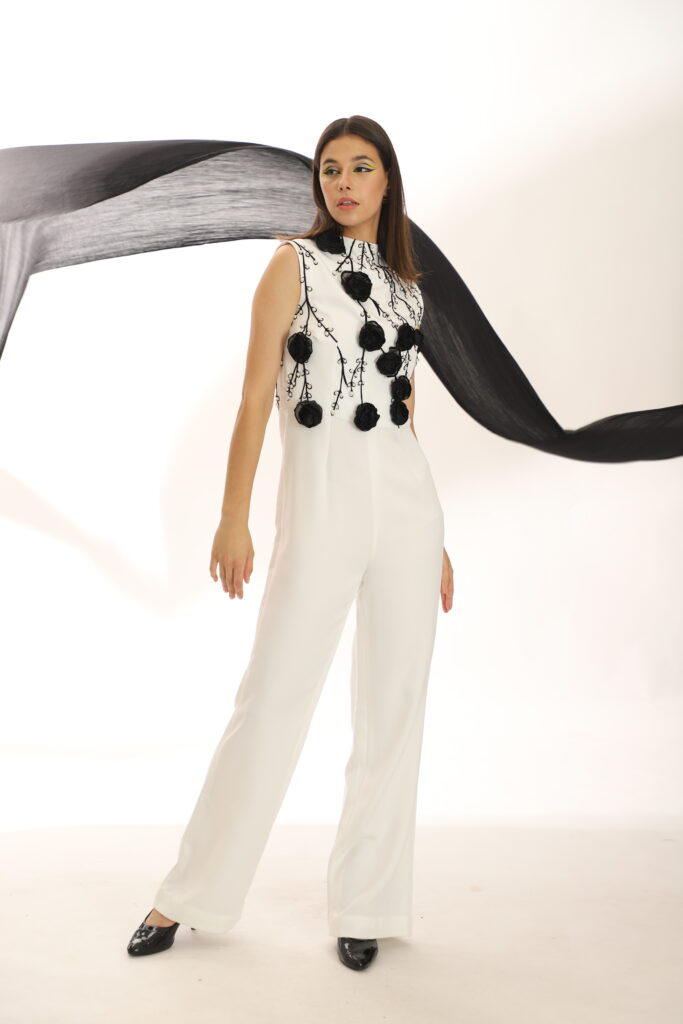
A jumpsuit has three possible points of interest: the neckline, the waist and the leg. Choose one to emphasise. A dramatic neckline suits simple trousers; a belted waist suits a cleaner top; a wide leg suits a fitted bodice. The Aster Jumpsuit, in white crepe with organza flower detail, makes the neckline and surface the focus.
Proportions and hems
- Wide-leg: wear high heels or platforms so the hem skims the floor and elongates the leg.
- Straight-leg: works with a pointed heel or a flat; hem should just touch the top of the shoe.
- Cropped: pair with a strappy sandal and show the ankle.
Accessories
If the neckline is high or detailed, keep earrings small. If it is deep or strapless, add a statement earring or a fine necklace. A belt can define the waist on softer jumpsuits; skip it on structured ones. A small clutch keeps lines clean.
Layering
A fitted blazer or a cropped jacket changes the mood, from evening to a smart daytime look. For cooler weather, a long coat in a neutral shade works over most jumpsuits. See our guide to winter layers and coats.
Choose one place for the eye to land: neckline, waist or hem. A one-piece outfit looks most elegant with a single focal point.
Styling a gown
Match silhouette to your own
Four gown silhouettes appear most often.
- Column: a straight line from shoulder to floor. Sleek and modern.
- A-line: fitted at the top, flaring gently from the waist. Easy to move in and very forgiving.
- Fit and flare: fitted through the hip, then flared. Dramatic but needs room for steps.
- Tiered or ruffled: layers of fabric create volume and movement.
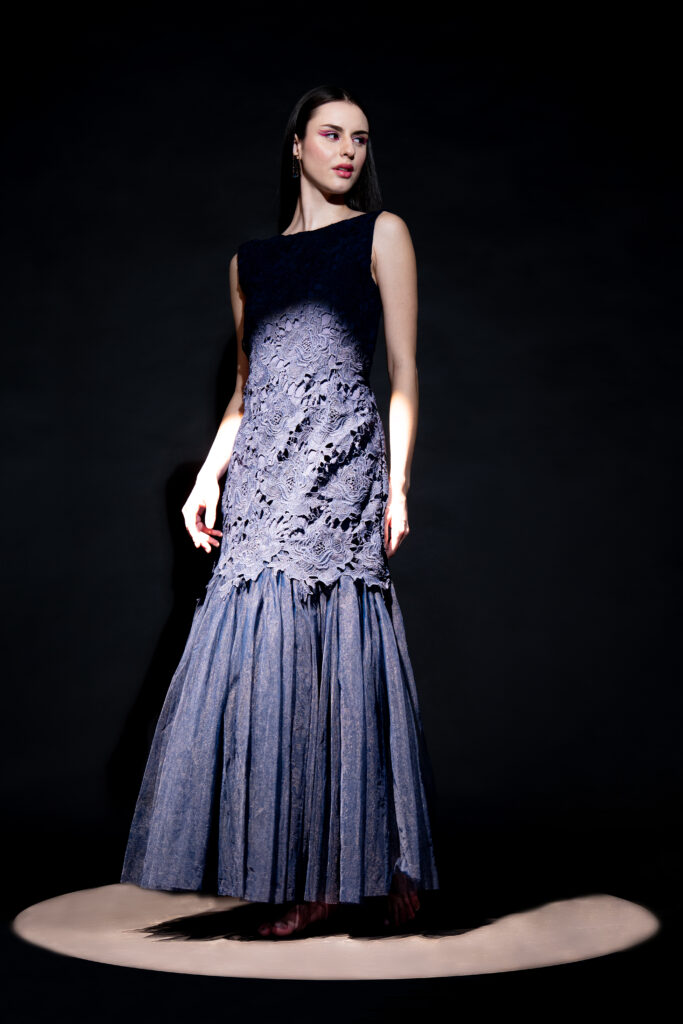
Look at where the dress shape is widest and place that where you feel confident. If you want to balance a fuller hip, choose an A-line with a defined waist. If you want volume, tiers do it effortlessly, as in the layered Aphrodite dress.
Length and shoes
A gown should skim the floor in the shoes you will actually wear. Always try on the final shoes with it. A hem that is slightly too long catches under the heel; too short looks unintentional. Hemming is one of the most common alterations, so factor it into your timeline. Our measuring guide and article on made-to-order timing help you plan.
Jewellery and accessories
A gown with a detailed bodice needs little jewellery: perhaps earrings and a ring. A plainer gown can carry a statement necklace or a bold earring. Choose a clutch rather than a shoulder bag, and consider a wrap or a short jacket for cooler venues.
Moving in a gown
- Practise walking and sitting before the event.
- Lift the skirt with a gentle gather at the front when climbing stairs.
- Check how you will manage the restroom and the car. Think through these before the day.
- If there is a train or a long hem, ask a friend to help in the first minutes of arrival.
Shoes and hems: the single biggest fit detail
Both jumpsuits and gowns depend on the hem. A trouser leg that is half a centimetre too long drags; a gown that is too short exposes the shoe in the wrong way. Decide your shoes before you finalise length, bring the exact pair to any fitting and stand straight with weight evenly on both feet while the hem is marked. If you are planning to wear flats and heels at different points in the evening, hem for the heels and carry flats for the dance floor.
Jumpsuit and gown mistakes to avoid
- Forgetting the torso length. A jumpsuit that is too short in the body pulls at the shoulders and crotch; check it sitting down.
- Too many accessories. A one-piece outfit has a clean line; do not break it with a belt, a stole and a statement necklace at once.
- Ignoring undergarments. Choose underwear that suits the cut, whether strapless, backless or low-cut.
- Not testing the fastening. A back zip you cannot reach alone is a problem; ask someone to help or choose another fastening.
Colour and fabric choices
Light, flowing fabrics such as georgette and layers of net suit warm weather and dancing. Structured fabrics such as crepe and scuba hold the line of a jumpsuit or a column gown. See our fabric guide for detail, and our colour guide for palette ideas.
Fabric and fastening checks before you commit
Ask three questions of any one-piece outfit: how does it open, how does it move and how does it sit when I am seated? Product photographs rarely answer all three, so read the description for fastening details such as back zips and straps, and message the team if you are unsure. For made-to-order pieces, it is far easier to clarify beforehand than to adjust afterwards.
Wearing either to a wedding
Both work at weddings. A jumpsuit suits a sangeet or a cocktail evening; a gown suits a reception. For a ceremony, choose modest necklines and rich fabrics, and avoid white and ivory. Our wedding guest guide explains each event.
Shop the one-piece edit
Browse jumpsuits and gowns, or explore Faire La Fête, the collection inspired by celebration and evening dressing. For help choosing a size or silhouette, message the team on WhatsApp.
Frequently asked questions
Can I wear a jumpsuit to a formal event?
Yes, if it is cut from a refined fabric, tailored well and styled with heels, jewellery and a clutch. Check the invitation: for strict black tie, a gown is the safer choice.
How do I choose the right gown length?
Try it on with the exact shoes you will wear. The hem should skim the floor without catching under your heel.
What shoes work with a wide-leg jumpsuit?
A heel or platform, since the leg should nearly touch the floor. The hem should be hemmed to the shoes you plan to wear.
Is a gown practical for dancing?
It can be, if the skirt has room to move. A-line and tiered gowns are generally easier to dance in than narrow column styles.